ENGINEERING THE NEXT GENERATION
Insights, updates, and deep dives into how AI is transforming business operations.
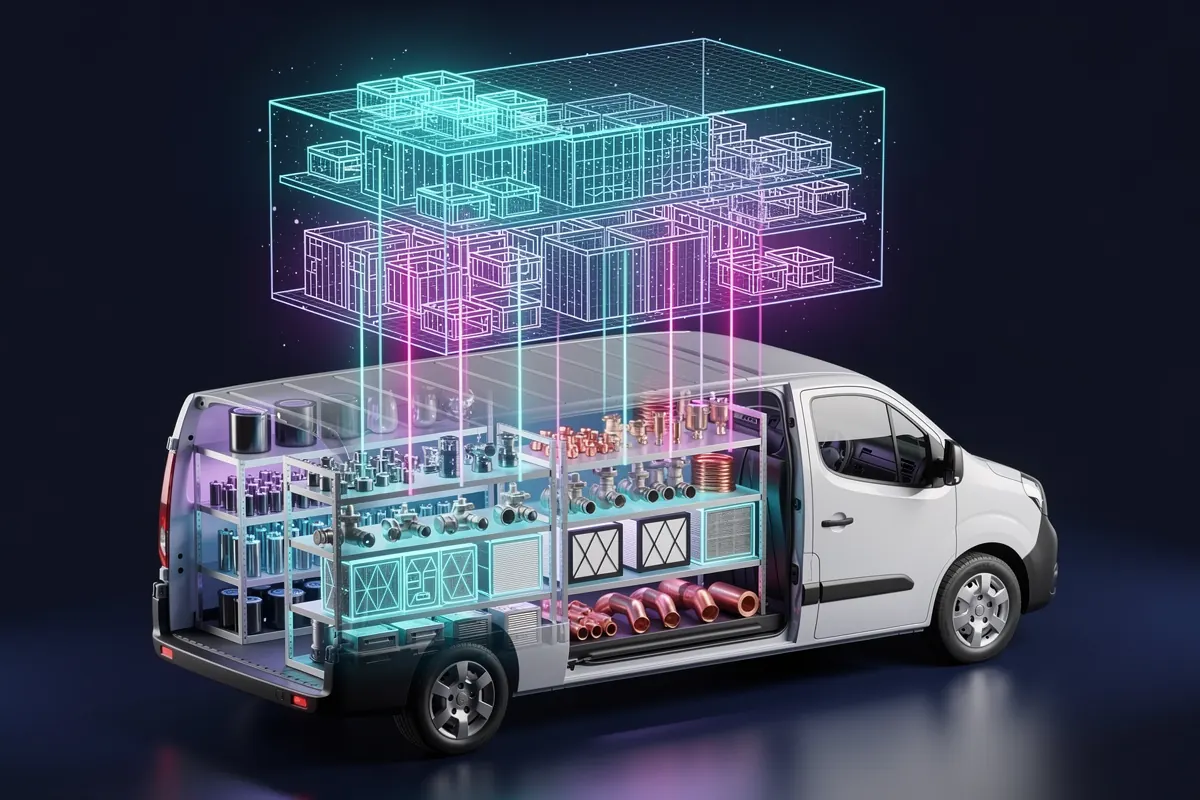
A quantitative method for deciding which parts, and how many, each field service van should carry: job-level hit rate, Poisson stocking for slow parts, ranking by value per shelf space, and using job intake data to predict parts before dispatch.
A practical framework for deciding which AI agent actions need human approval, how to build approval so it actually controls what executes, how to stop reviewers from rubber-stamping, and when to give an agent more autonomy.
There is no magic number of months. What you need depends on seasonality, forecast horizon, model complexity and how much your market has changed. Here is how to work it out, and what to do with new products that have no history at all.
Why standard forecasting breaks on slow-moving and spare-parts demand, how Croston's method and its two main successors work, how to classify which items need them, and how to judge the result without MAPE.
A founder's guide to selecting an AI MVP development partner, with a practical scorecard, interview questions, budget ranges, and contract checks.
A practical guide to integrating AI with legacy systems using APIs, middleware, database access, files, queues, and controlled user-interface automation.
A practical shortlist of AI chatbot development companies for customer support, sales, internal knowledge, and enterprise workflows.
Twenty-five production-minded AI automation examples, each defined by its trigger, action, human checkpoint, and business result.
A buyer's guide to AI consulting scope, pricing, deliverables, and selection—built around production outcomes rather than slide decks.
A practical comparison of 12 AI automation agencies for custom agents, workflow automation, conversational AI, and enterprise integration.
A practical 2026 breakdown of AI agent development costs, from a narrow single-task agent to an enterprise multi-agent system with custom integrations.
A practical architecture for automating field-service intake, work orders, scheduling, dispatch, customer updates, technician notes, invoicing handoffs, and exception recovery.